
New Jersey holds its general election on November 3: a U.S. Senate seat, all twelve House districts, and county and municipal races across the state. But November 3 isn’t when New Jersey votes. It’s the last day New Jersey votes.
The voting starts September 19.
Forty-five days of Election Day
State law requires county clerks to mail general-election ballots at least forty-five days out, which this year means September 19. They go to everyone on the permanent vote-by-mail list. Vote by mail once, or check the box for all future elections, and the clerk keeps sending ballots until you opt out in writing. After three cycles the list runs to hundreds of thousands of voters, skewed toward the reliable, older, high-propensity people in every campaign’s base.
Ballots come back within days, by mail, at the board of elections, and mostly through the secure drop boxes every county runs, at least ten per county by statute. By the first week of October, a meaningful slice of the electorate has finished voting.
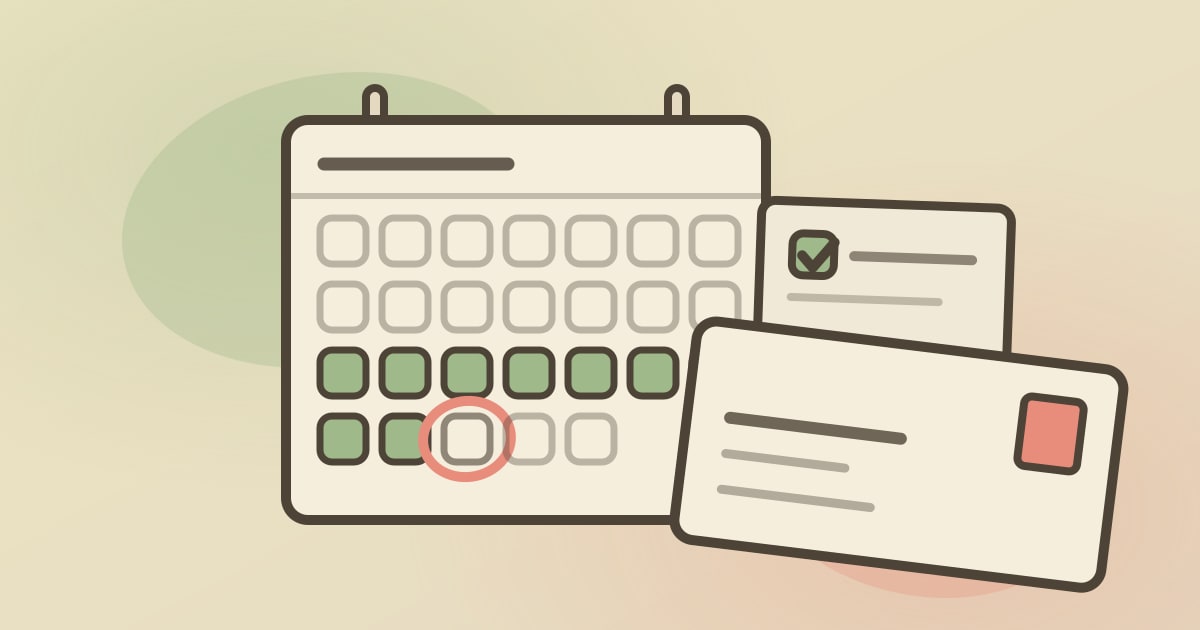
The rest of the calendar:
- October 13: registration closes, twenty-one days out. After this summer’s voter-roll mess, put a status check in your September scripts.
- October 24 through November 1: nine days of in-person early voting on machines, every county, weekends included.
- October 27: last day a mailed vote-by-mail application can reach the clerk, seven days out.
- November 2, 3 p.m.: last chance to apply in person at the clerk’s office.
- November 3: polls open 6 a.m. to 8 p.m. A mail ballot postmarked by Election Day counts if it arrives within six days.
There is no final push, just a six-week window.
What a draining universe does to a plan
Every returned ballot is a voter who no longer needs a knock, a call, or a mail piece. A universe cut in early September is badly wrong by late October, and the error all runs toward wasted contact. A knock on a banked door costs a canvasser’s hour, and “I already voted” tells a supporter your campaign doesn’t know what it’s doing.
The old model, persuasion until Halloween and then GOTV weekend, assumes votes land on one day. In New Jersey you’re running three overlapping elections: mail from September 19, early in-person in the last week of October, and Election Day for whoever’s left. Each has its own universe, message, and last mile. Treat them as one and your budget ends up aimed at the smallest.
The chase is the cheapest contact you’ll make
Ballot-status data flows back from the counties as ballots go out and come back. Match it against your file and voters fall into three buckets: voted, holding a ballot, and everyone else. The middle bucket is the chase.
A low-propensity supporter with a ballot on the kitchen counter is a logistics problem, not a turnout problem. The ask shrinks from “make a plan, find your polling place, carve out a Tuesday” to “it’s behind the toaster, and the drop box is outside the library.” It’s the one place in field where a marginal contact reliably moves a marginal vote.
A high-turnout voter will return the ballot without your help. Chase budget belongs at the bottom of the turnout score, and most programs run it backwards because their chase list is sorted by the same score as everything else.
When a returned ballot is flagged for a signature mismatch or a missing certificate, the county mails a cure letter and the clock starts. A cure contact is a vote already cast, one form away from counting. Work every one.
Run it from the file, not from a Friday export
What kills all this in practice is vintage, which we keep coming back to. A chase list exported Friday is stale by Sunday.
Romulus treats a universe as a definition rather than a snapshot that re-evaluates every time it’s opened. Load ballot status as it updates and banked voters fall out of turf and call queues on their own, and the chase universe refills as new ballots go out.
Your fall plan’s real deadline is September 19: universes built, scripts written, chase infrastructure live.